


Noah Fenske reflects on life-changing experience at SIU (Part One)
- Tom Weber

- Dec 1, 2025
- 6 min read

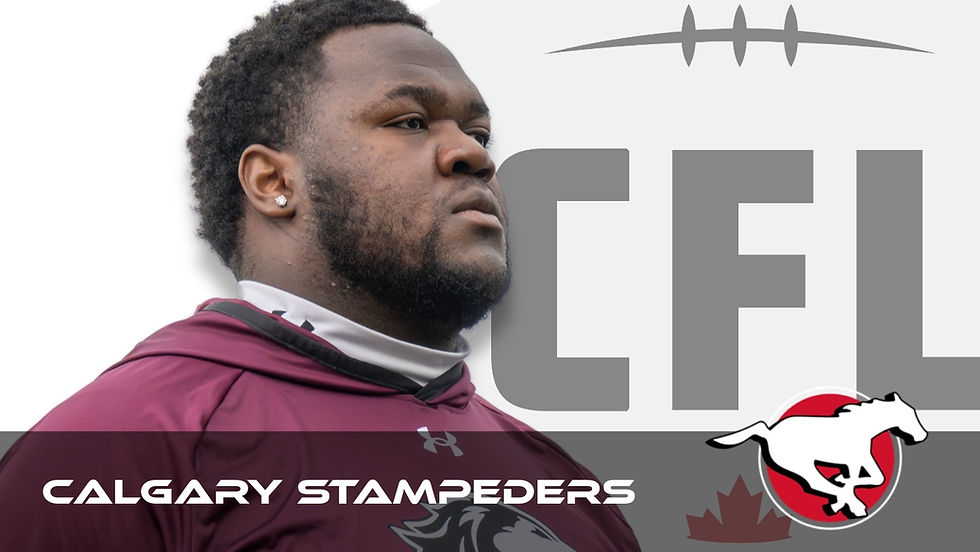
CARBONDALE, Ill. — At the end of a seven-year college football career, Southern Illinois all-conference center Noah Fenske took some time to reflect on his journey and the life-changing experience he's had since arriving at SIU in 2023.
A gifted four-sport athlete in high school, who won the shot put at the prestigious Drake Relays, Fenske played at the highest level of college football, with stops at Iowa and Colorado.

His athletic success hid the difficult family circumstances that required him to learn perseverance and self-reliance at an early age.
While his family situation is in a much better place now, Fenske described himself as “a little broken” when he first arrived at Southern.
In Part One of Fenske’s story, he talks about his “rough childhood," the inseparable bond he developed with his older brother, and his path to Southern Illinois, a place he now proudly calls home.
SD: Tell me about growing up in small-town Iowa and the challenges you and your older brother, Josh, experienced.
NF: I was born in Mankato, Minnesota, and then we moved to Forest City, Iowa, where my dad took a newspaper job. I was there until third grade, and then we moved to New Hampton, Iowa, where I spent the rest of my childhood.
Josh and I had a pretty rough childhood, but between the two of us, we were able to kind of escape that by finding different games to compete in, whether it was one-on-one tackle football in the backyard or playing with our dog. We were poor, so we had to find anything to do. When my mom was in rehab, me and him were cleaning up the apartment by ourselves. He was really a light when we were in a dark spot.
Playing football with Josh in high school was really special. He was the first one to teach me how to leave it all out on the field. I wouldn't be where I am today without him. He's just as supportive as they come. He cried more than I cried after my Senior Day game a few weeks ago.

SD: I understand your family has been through a lot, including losing your sister.
NF: Yes, I lost my stepsister, Sam, to suicide when I was 14. During that time, my mom was in rehab for drug abuse. Dad battled mental health issues. Mom battled mental health, drug abuse, went through two divorces and was a victim of domestic violence. Unfortunately, Josh and I had to see the brunt of that a few times. There were times when we were raising ourselves.
My dad's a great dad, and my mom's a great mom — it’s just the circumstances that they had. Mom had to get healthy. On December 5th, my mom will be two years sober. She's been in rehab 15, 20 times in her life, and the last time was right when I got to SIU. She was addicted to meth, and she got help, and now she's doing really well. She gets employee-of-the-month every month, and it's just been really inspiring.
SD: You excelled in much more than just football as a kid.
NF: I played football, basketball, track, wrestling. I really just used sports as an outlet to get through those tough times. My favorite sport depended on what season I was in. The goal was just to play a college sport. When I was in 8th grade, I remember talking to my dad about wanting to go to Wartburg College and just be an athlete, because that's what a lot of kids from New Hampton did. Now, I've played Division I football for seven years, so definitely exceeded the goal.

SD: How fun was it to have your dad cover your high school career?
NF: It was really cool to have my dad cover all my events, but there were also times it was frustrating, because my dad was such a reporter. When I won the Drake Relays, I wasn't even on the front page of the newspaper and I was the first male athlete from our town to ever do it. I think if it would have been anyone else, they would be on the front page, but he didn’t want to be seen as showing favoritism to his son.
My dad covered a lot of pro sports — the Twins, the Vikings, so he understood the athlete’s mindset. He always says, you can't get hung up on one play, you've got to be able to move on to the next play. I think it carried over to life, just the tough circumstances we had. It was that next-play mentality, like, so what, it happened. How are you going to respond to that situation?
SD: Was Iowa your dream school?
NF: No, I actually grew up a Cyclones fan, but Iowa was my first major offer. I really wanted to go to either Iowa State or Minnesota, because my sister went to Minnesota. I went on about 13 visits to Iowa State and didn't get an offer. On my last visit to Iowa State, we drove through a blizzard to get there, and I was the only kid that left that Junior Day without an offer. So I decided at that moment to go to Iowa. Looking back, I made an emotional decision, and I don't know if Iowa was truly the best fit. It was a great school, great people there, but I think I just needed to look longer for a better fit.
SD: How did you wind up transferring to Colorado?
NF: Iowa wasn't a good fit for me. I was growing on the field, but as a person, I wasn't growing. Really what led me to Colorado was their offensive line coach, Karl Dorrell, he was a good man, and I really liked Darrin Chiaverini, who was the offensive coordinator and is now the head coach at Northeastern State. I had offers from Missouri and other big schools, but I wanted to see something completely different.
I don't have any negative things to say about Colorado or Iowa. I learned a lot about myself, and there's a lot of great people there who I'm forever thankful for. By the time Deion (Sanders) arrived, I had already made up my mind about transferring. I wanted to go to a place that really wanted me.

SD: What brought you to SIU?
NF: I've actually known Coach Hill since I was 14, 15 years old. My brother was recruited here, and my head basketball coach in high school is Coach Hill’s brother-in-law. The Hills used to come up all the time to New Hampton. We’d see them at church during the holidays. I knew the type of program this was. There's a lot of really good men who have come out of this place, so there was a strong pull to come here, and I know that I made the right decision.
SD: What are the main differences between playing at the Power Four level and Southern Illinois?
NF: I think one of the biggest differences is the Power Four schools don't develop men as much as this place does. You see some people come into SIU’s program from extreme circumstances, and they need that molding to be a better person. They come out a better man. The coaching staff brought me in, and I might have been a little broken at that time, and they just helped me find who I am and become a better person.
SD: Talk about O-line coach (Dan) Clark’s role in your development and the brotherhood within the O-line room.
NF: Coach Clark has just been an absolute blessing to me. He pushed me beyond what I even thought I could be, not only as a player, but as a man. The most important thing that I learned is, you're not entitled to anything. Just because you work really hard, it doesn't mean you're entitled to go win. You still have to execute.
I remember vividly talking to him during the South Dakota State game last year. We're down, 42-14, and the starters just got pulled. I remember looking up, and I said, “We’re not ending like this. We're gonna get the O-line room turned around.”
Since that time, I've never seen a bunch of people just put their heads down and go to work and just grind every single day. Coach Clark is a brother for life. All the guys in the room and Coach Clark are my brothers for life. I cherish this program for those guys.
In Part Two tomorrow, Fenske talks about meeting his fiancée, becoming a foster parent, starting his own business in southern Illinois, and how he’s been embraced by the community.
Comments