


The Saluki Football operation runs smoothly under Chris Gillespie, and it’s not magic


CARBONDALE, Ill. — If you hand Chris Gillespie a deck of cards, he can perform an impromptu magic trick that will blow your mind. He’s been an amateur magician since the age of nine.
In his job as Saluki Football’s director of operations, there is no sleight-of-hand involved. Keeping a complex operation running smoothly is no magic trick. Gillespie works tirelessly behind the scenes to make it so.
Picture a giant jigsaw puzzle of timelines for practices, games, meals, travel, recruiting, classes, community service and more. Add in 105 players, dozens of staff members and a small army of student assistants, and then shuffle the pieces.
Making all the parts come together into a cohesive whole is a labor of love for Gillespie. The 35-year-old Carbondale native, who studied organizational communication at SIU, is motivated by a deep appreciation for his alma mater and its place in the community.
Gillespie didn’t set out to work in college athletics, but every step in his career path helped prepare him for a key role with Saluki Football, first as the team’s video coordinator, and ultimately serving in the critical operations position.

StrongDawgs Q&A with Chris Gillespie
SD: Talk about your lifelong ties to this community.
CG: Being born and raised in Carbondale means a heck of a lot to me. I’m an SIU grad, and most of my family graduated from SIU, as well, including my mom, my older siblings and their spouses. As a kid, I attended SIU basketball camps with Bruce Weber and Matt Painter. I can remember in sixth grade, during the Sweet 16 run, our teachers let us watch the Salukis in the NCAA Tournament. That’s how much it meant to the city of Carbondale and to the community. At the basketball home games, our church would work the concession stands as a fund-raiser. Going to those games were great childhood memories.
SD: Speaking of your church here in Carbondale, your family has played a big part in its history, and it led to your involvement with Hannah House?
CG: Yes, the church is now called March of Faith Community Church, but my great grandfather founded it as Greater Gillespie Temple Church in 1943, and the first sanctuary was purchased and the church chartered in 1953. My grandfather, Bishop C.W. Gillespie Jr., took the reins of the ministry in 1976.
My grandmother, Addie Gillespie, started the Hannah House Child Development Center in 1997. There’s a story in the Bible about Hannah not being able to bear children. She prayed that if God allowed her to have children, she would dedicate their lives to Him. That’s why it’s called Hannah House. I’m on the executive board, and we bring the team there for community service throughout the year. So the church has had a big impact on my life.

SD: Unlike most of the rest of the staff, you didn’t play football in high school or college. What led you to a career in sports?
CG: I like to consider myself an athlete. I played basketball at Carbondale High School and we had some success, making it to the super-sectional championship my senior year. Growing up, basketball was a big deal in this area. We had Carbondale guys like Troy Hudson and Justin Dentmon go to the NBA. Rashad Tucker went to SIU. I remember Kent Williams from Mount Vernon taking over Carbondale and putting on a show.
My introduction to football happened about six years ago was when I came across a Facebook post that Coach Hill had put out. At that point, I was working with John A. Logan and helping out coaches Kyle Smithpeters, John Clancy and Tyler Smithpeters in the creative media space. Saluki Football was preparing for a recruiting visit and needed some help with the photo shoots and videos. I started out as a volunteer, and we had a good success rate on the guys we signed.
SD: Your resume has an interesting mix of jobs prior to working at SIU. What were some things you picked up that have helped you in athletics?
CG: My first job when I was in school was at Shoe Carnival here in Carbondale. I was the mic person, which was a tremendous help learning to interact with strangers. I left Shoe Carnival to work at Dillard’s in Marion. I sold women's shoes and women's handbags. I had a book of clients that would come in and I was making a commission.
After I graduated, I worked at the Marion Rehabilitation and Nursing Center as a program coordinator. I learned a lot about filling roles. They didn't have an activity bus driver, so I had to become the activity bus driver. I would take patients to their doctor's appointments, take them to their cancer treatments.
I did that for a year before I took a leap of faith and moved to St. Louis, South County. I really didn't have a job when I first moved there, so I went and applied for a job at Bank of America. I just walked in the door, told the president of the bank my story, and he hired me. His name is Jon Stogsdill, and he’s one of my favorite leaders I've ever had. I started out as a teller and moved toward relationship banking.
One of the best things that ever happened to me during that time, honestly, was getting fired. I was a no-call, no-show, one day after having some tardiness. I just felt like I let him down. This person had invested in me emotionally, took a chance on me, and I let that person down just from my own behavior. This was the first place I heard it called “coaching.” It wasn't like I was being disciplined, but I was being coached up. That helped me perfect my habits now. I think the staff here would say I'm probably one of the most reliable on the staff. We joke about the best ability is availability. If it wasn't for getting fired, some of those habits wouldn't have changed.

SD: How did you get into video?
CG: I came back to Carbondale and was trying to find something I was passionate about and I picked up a camera. I started camera operating at TCT, The Christian Network in Marion. My mentor, Evan Brown, was one of the best videographers to come through SIU’s program. He was at one point the video coordinator for the football team, but I didn't know that until later down the road. I just kept developing my video skills and it grew into a passion for film. I started doing a lot of freelance videography and got good enough where I could charge people. I was shooting high school sports, camps, plays. That turned into commercials for small businesses in the area. Then it ended up in coaches film.
SD: How did you land the video coordinator job with Saluki Football?
CG: Initially, it was all creative media, like helping with photo shoots with the recruits. I filmed, produced and edited a marketing video for a youth camp that Coach Hill posted on Facebook, and we were able to increase our numbers for camp. Six months later, he called me and offered me the full-time video coordinator position.
It involved a learning curve, but it was a fun new challenge, and the other VCs around the Valley were super helpful. There's a good community of video coordinators all across the country and everyone tries to help each other.
SD: Being a football video coordinator is a complex job with strict deadlines, isn’t it?
CG: Yes. We have four main camera operators, two on the roof, one in each end zone, and there's so many moving pieces. I really had never seen a football practice. I can jokingly remember when they said they were going to do Indy drills. I thought that was short for Indiana. I didn't know it meant individual drills for each position.
Seeing 100-plus people on the field at once can be overwhelming visually. You’re directing traffic on what to film and then becoming comfortable with the software we use to upload the film, which is DV Sport. The biggest objective for the VC is getting the film up after practice and games as fast as we can so the coaches and student-athletes can start reviewing it.

SD: Why is it crucial to have the film uploaded so quickly?
CG: Watching film is a huge part of a coach’s job, whether it’s evaluating ourselves or scouting other teams. Whenever we're traveling on a road trip, it's always important for me to have the film ready on the bus, on the plane, so the coaches can review it on their iPads. When a coach can grade the film on the flight back, that leaves them more time to spend with their family that evening or the following day. I think about, how can I give the coaches as much time for resting and recuperating before we have to be back the next day? So if I can get them to grade that night on the way back, then they don't have to come in at 6 a.m. in the morning, they can make it to church, and then come to the staff meeting. Luckily now, I’ve been able to train up a new video coordinator in Saluki alum Devan Williams to take over those responsibilities.
SD: At what point did Coach Hill put you in charge of overall operations?
CG: The conversation came up when Buck (Brett Johnson) was transitioning to work as a coach in the XFL, but I wasn't necessarily ready. I didn't feel ready. Elizabeth Toth took over the position, and a year later, she made a career change to Kent State. That's when my number was called. We were only a week or two away from Fall camp. My specialization in college, ironically, was in organizational communications, and I thought it was super appropriate. I had already built relationships with the staff. My role had already expanded so much beyond being a video coordinator so it was a pretty easy transition.

SD: Explain what goes into your job.
CG: I like to just say I oversee everything off the field. That's the easiest way to describe it. We already have the upcoming season travel done — all the bus and plane charters, hotel rooms, rental vehicles and buses that we need to accommodate our party size. Right now, I’m coordinating with the incoming freshmen and their parents on moving them into the dorms on June 6, while helping the current freshmen move out of the dorms and off campus. I’m also creating some new opportunities to bridge the gap between our student-athletes and the community. For example, I’m setting up speakers for a financial literacy seminar for our team. We’ll invite guest speakers from the community to talk to the group about life and careers after football. I’m creating a list of team-building activities that that will help sustain the culture we already have. I still help in the video space if there’s a creative video Learfield needs help with.
This morning, I went to the Carterville Rotary Club, spoke a little bit about our Adopt-A-Dawg program. I handle the administrative side of our kids camps, which are coming up next month, and coordinate community engagement, such as a youth basketball tournament in Cairo and a trip to West Frankfort Elementary School. We stay busy in the summers.
SD: You mentioned the culture. Describe the culture within Saluki Football and how you try to enhance it.
CG: I feel like the guys fight for each other and they’re connected really well on the field and off. We always say, the best teams are player-led. The culture that we try to establish is, first-off, developing good young men in the community and in the classroom. We make sure that we continue to recruit guys that fit our program.
I feel like I help sustain that culture by practicing my Top 5 leadership skills — modeling the way, encouraging the heart, inspiring a shared vision, enabling others to act, and challenging the process. I try to follow those leadership skills, model the way, and be an example. I am one to always say that there's a leader in every chair. No matter the role, no task is too big, no task is too small.

SD: Where did you pick up those five leadership skills?
CG: It’s from a college of engineering project and leadership course I took in grad school at SIU with professor Bruce DeRuntz. He went on to write a book about SIU alumnus and U.S. Navy SEAL veteran Will Bushelle. Those Top 5 skills always stuck with me.
SD: You have a unique gift when it comes to magic. How did you get interested in magic?
CG: It started when I was in fourth grade. My brother-in-law, William Davis, came back from Las Vegas with a floating card trick from Houdini Magic Shop. It used an invisible thread that made it look like you were floating a card in the air. I was hooked. At school we had the Scholastic book fair, and I noticed they had a section for magic tricks. It was like $25 and I convinced my mom to let me purchase it. I started buying books, DVDs, looking things up on the internet on how to do sleight-of-hand and card tricks. I always had to pick impromptu, which basically means, if you just give me a deck of cards, I can do my trick. I was nine years old, so I couldn't afford to keep buying books or buying gaff tricks that are pre-setup, so everything I learned needed to be done with everyday-used items.
At some point, the staff found out I could do magic tricks, and they asked me do it for the team. I used to do it every away game for the quarterbacks. I was like, look, I can’t do this every week, I’m gonna run out of tricks after a while! I can't just keep raising the bar, but it's been great, though. Performing magic is super fun for me, and it's helped perfect some of my communication skills.
SD: What's your best trick?
CG: It's called the Ambitious Card Routine. The card keeps rising to the top of the deck. So you pick any card from a random deck, and I’m gonna put the card face down in the middle of the deck. Without doing anything but snapping my fingers, the card is going to rise to the top of the deck. I do this five or six different ways, and it just keeps building every time.
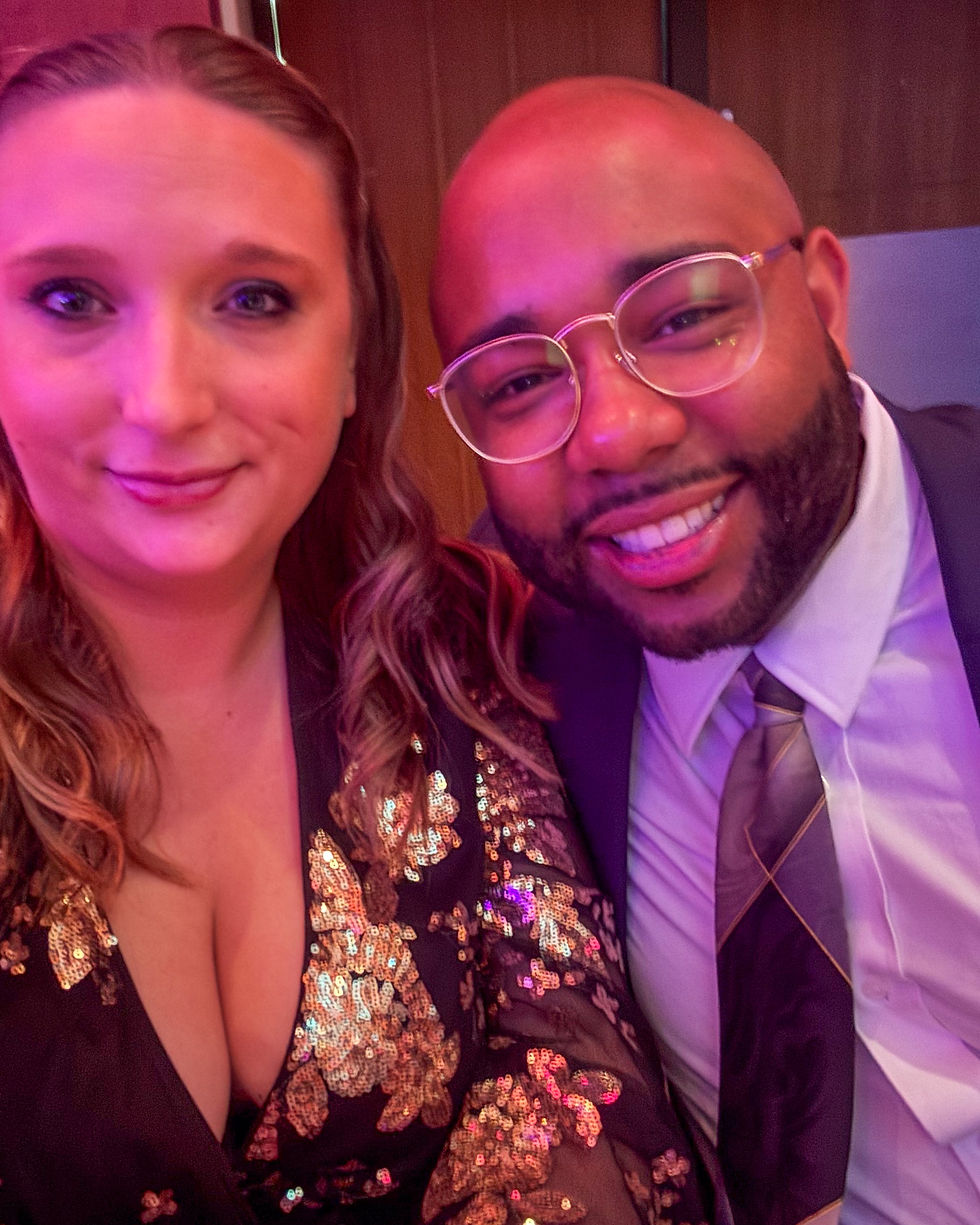
SD: You're engaged to be married?
CG: Yes, my fiancée is Jamie Ragan. We met here at SIU and she’s a branch manager for the SIU Credit Union. When I first took the role as VC, she was one that supported the idea of me working in athletics. She's a big help to me and a positive force in my life, encouraging me throughout the season. I spend a lot of long hours here, and then she works full time, too, and still somehow manages to help take care of me. We enjoy spending time together, taking care of our pets, and she’s gotten me into gardening.


Comments