


Saluki alum Mark Philipp (2002-05) reflects on football journey, including Super Bowl LX win


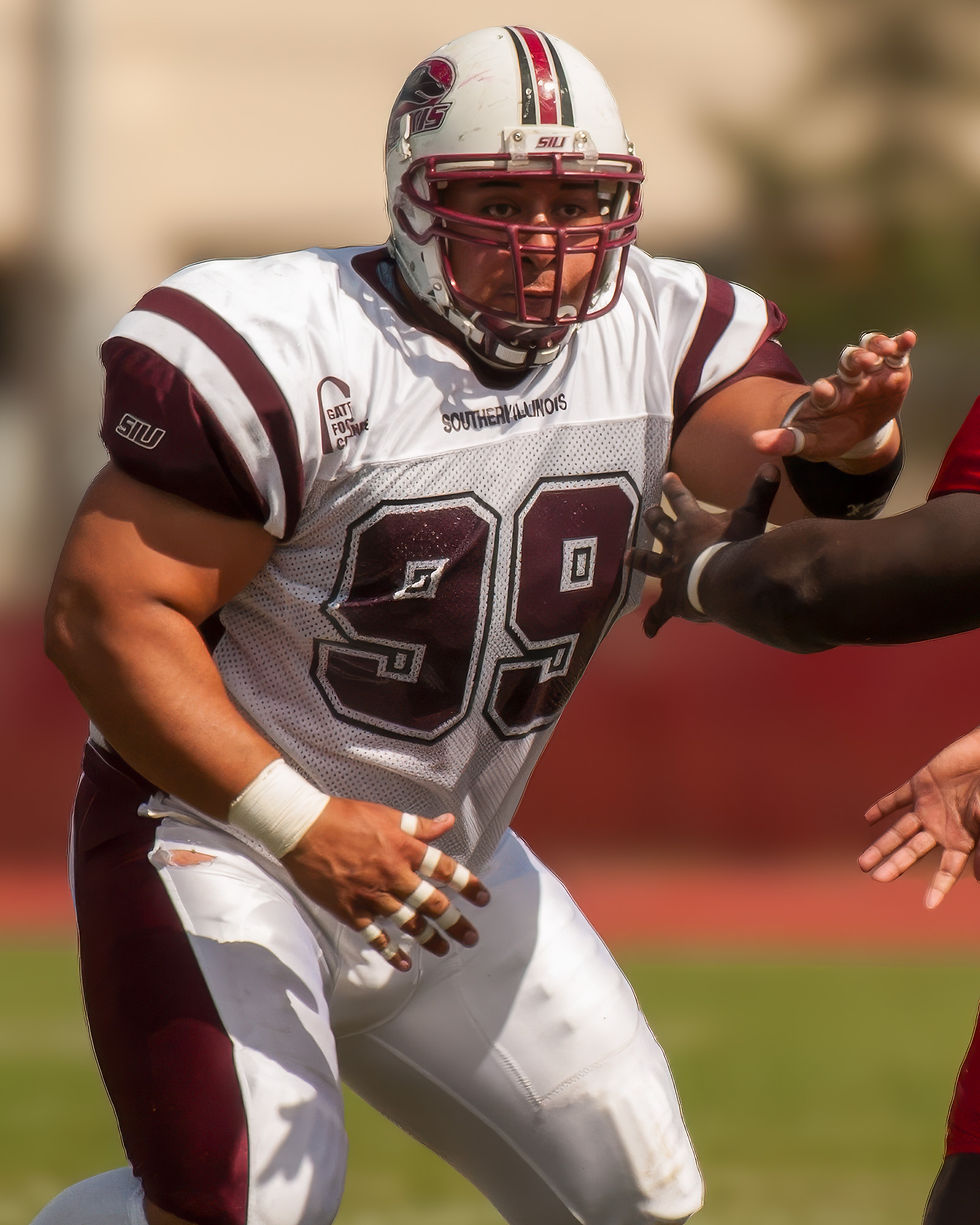
CARBONDALE, Ill. — Fresh off a victory in Super Bowl LX, Seattle Seahawks associate head strength coach Mark Philipp took time this week to reflect on his football journey that started as a defensive tackle at Southern Illinois (2002-05).
Born in the U.S., but raised in Samoa, Philipp initially paid his own way to attend SIU. After earning a scholarship, he played in 47 games for the Salukis, recording 83 career tackles, 7.0 sacks and 18.5 tackles for loss. He was named to the all-conference team his senior year.
Philipp was a key part of the renaissance of Saluki Football, helping the program win 33 games, claim three conference titles and make three playoff appearances.
A two-time team weight-lifting champion at Southern, Philipp became a strength coach, working at SIU, Oregon State and USC, and eventually becoming head strength coach at Nebraska.
In 2019, Pete Carroll tapped him to join the staff of the Seattle Seahawks, where he recently completed his seventh season.

StrongDawgs conversation with Mark Philipp
SD: You are southern California born and raised?
MP: No, I was born in Lakewood, California, but then I was raised in Samoa with my grandmother, while my parents were trying to get on their feet. I moved back to the States during elementary school, and then grew up a normal childhood. Big family — I can't even count how many families lived in one house, but it was a lot of love.
SD: How did you become interested in football?
MP: We used to play with adults when we were in high school. They used to have pickup tackle games with no pads at the local schools, you know, the turkey bowls. My cousin, Steven, ended up playing at UCLA, and I just enjoyed going to watch the games when he was in high school and kind of tried to emulate him. Two of my brothers went to play at Arizona, and then one (Michael Philipp) went to Oregon State, and he played in the NFL for a little bit.
SD: How'd you wind up so far from home at Southern Illinois University?
MP: I was a Prop 48 guy at the time, and Coach (Mike) Kavanaugh at Hawaii took a chance on me, but they had just run out of Prop 48s, and Mike ends up calling Jerry Kill. Jerry's never seen me play, and Jerry calls me up, and he's like, man, I respect Mike, and if he says you're good, I'm gonna bring you out here. And so I propped at SIU first semester, and then I made grades and they picked up the rest of my school.

SD: You were a starter your redshirt freshman year in 2002. Did that come as a surprise to you?
MP: I’m a competitor. My whole family are competitors. I think it's something we all expect, and if you fall short, you just figure out a way. What do I need to do to get better? How do I get on the field? Not by complaining, but by the work you're putting in. I kind of carried that throughout my whole life and my whole coaching career.
SD: That 2002 team went 4-8, but it was the start of the program’s turnaround, wasn’t it?
MP: Oh, man, we had such great leadership. Bart Scott was on our team. We had Joel Sambursky, we had Alexis Moreland. I can remember Moreland came in the room one day and he said, ‘we're going to go from worst to first.’ And that very next year, we ended up beating a lot of people, winning the conference. It was a special group, with guys like Elmer McDaniel, Billy Beard, Arkee Whitlock, Eric Egan, so many guys that were hungry and willing to do whatever it took to win.
SD: The 2004 team was so dominant — ranked No. 1 for 10-straight weeks. The defense only gave up six rushing touchdowns all season. What do you remember most about that season?
MP: What I remember is just the brotherhood and how much fun we had on that team, the way we hung out, the camaraderie. No matter where you were from — white, black, Mexican, from different parts of the USA — dudes just loved each other and had each other's backs. We played for each other.

SD: You played for some good coaches as well. Tell me about your defensive coordinator, Tracy Claeys.
MP: Oh man, Tracy was a genius. He put us in position to make plays, just did a ton of great things for us, defensively. The halftime adjustments, if something wasn't working, he’d put us in the right position and get everybody to the ball.
SD: And then obviously Jerry Kill leading the program, what was it like playing for him?
MP: He was a father figure. Jerry was a guy, even when you were down and out, he never gave up on you. It just made you want to play for him more.
SD: Was there a time when you were down a bit in your career at SIU?
MP: Early on, I had a time when I hurt my knee and I was really in the slumps because I was so far away from home. My family didn't have money. It wasn't like they could fly out there and visit me. It was just a lonely time in my life, and Jerry covered me up and just showed how much he cared for me. Those are things that I remember. After I got my first job at Oregon State, he was one of the first guys that called and told me how proud he was of me. It just meant the world to me.
SD: What do you remember about college life at Southern with your teammates?
MP: You know, sometimes I want to go back and just do one more year. My roommates were Joel Sambursky, Justin Kramer, Billy Beard, Jeff Jones. That was a good apartment. Carbondale is such a special place, man, especially at the time we were there. It was just a real college atmosphere. The community was amazing. There were families that adopted the athletes and helped feed them. They were kind of our sponsors, and I thought that was the neatest thing in the world.

SD: How did you get into strength training after graduating from SIU?
MP: I wanted to chase the NFL dream and gave myself two years, and then fell on hard times. My father passed away and my two younger brothers were still in high school. My father was a selfless man. He’d switch his schedule to make sure that he was able to take us to school, pick us up, make sure he was at all our games, and I wanted to do the same for my brothers. So I went into construction until they graduated to help my mom out.
I told her once they graduated that I was gonna pursue my dream to be a defensive line coach. I ended up at Oregon State, and it just so happened I ended up in the weight room. That was where they could pay me, and I was still helping out on the football side, and I just kind of fell in love with training the guys.
SD: How did SIU strength coach Clete McLeod impact your development in the business?
MP: Oh my gosh, big time, man. I worked with Clete at SIU and then I worked with him at Oregon State as an intern. He’s just a GOAT. He taught me the tricks of the trade and challenged me to be a better strength coach. I owe a lot of my success to Clete, and we still keep in contact to this day. I hired Clete as my associate head coach when I was the head coach at Nebraska.
SD: I read that you believe strongly in having a player-led culture within the strength program. Why is that so important?
MP: I think a coach can come up with something, but if it's not a player-led thing, then it kind of falls short and you're just throwing stuff on the wall. When it's a collaboration and we all agree with the standard, it’s easier for other guys to hold guys accountable. You know, it can't just be my standard.
SD: How did you make the transition from college to NFL?
MP: When Lane Kiffin was fired at USC, I was on that staff, and Ivan Lewis came in and took a chance by retaining me. So Ivan has been one of my mentors, and we've been close ever since I left Nebraska. A year later, Pete Carroll calls us up, and that was a no-brainer (to go to the Seahawks). Two years ago, Pete gets let go. Mike (Macdonald) comes in — such a great coach — and he took a chance on us. Two years later — Super Bowl champs.
SD: Have you found any differences working with pro athletes vs. college?
MP: I don't think there's a difference. They're all competitive. All of them want to be the best, but people get paid differently. Training-wise, it's no different. These guys go hard. In college, those guys go hard.
SD: In your mic'd up video that the Seahawks posted, you can really see the chemistry that you have with the players.
MP: Yeah, I mean, I love these dudes. These dudes love me. I think being authentic and building rapport with the people you work with makes it easier for you to get on them, because it comes from a place of love. When you show somebody how much you care, I think it's reciprocated.

SD: You’ve risen to the top of your profession. Did you ever stop and pinch yourself and ask, how did this happen?
MP: When I got to Nebraska, I did. It was just a surreal feeling, but that was never a goal of mine. A great mentor I’ve had is Jeff Macy, who’s an associate athletic director at Oregon State. He would always tell me, don't chase the money. If people want you, they'll hear about the good things you're doing and they'll come and find you. That's how it happened.
SD: Tell me about the experience of winning a Super Bowl.
MP: You know, I can't stop reliving it. It's such an amazing feeling, especially when you do it with a bunch of amazing people. The Seahawks organization is amazing from top to bottom. It was just so much fun, is all I can say. It wasn't bigger than what it was supposed to be, and I think that's what made it so cool.
SD: How was the victory parade?
MP: Oh my goodness. It was amazing to be able to bring it back to the city. Kids skipped school to come and celebrate this. People flew in to Seattle just to see the parade. There were people on top of the buildings, on top of light poles, trees. We all got to celebrate it together.
SD: Having reached the pinnacle of success, what are you looking to accomplish next?
MP: Run it back. I want another Super Bowl.

SD: Tell me about your family life.
MP: I’m pretty mellow, man. My wife is the glue, as all coaches' wives are. She works full-time and she's a full-time mom, so I can't say enough about her. I have two kids who are super-involved in sports.
SD: Twenty years later, can you reflect on the appreciation you have for your alma mater?
MP: I mean, I can’t thank SIU enough for taking a chance on me. I played football in high school just to stay out of trouble. Never in my wildest dreams would I have thought that I would have graduated college.
SD: Anything else you’d like Saluki Nation to know?
MP: Brother (Nick) Hill's a great coach, man. A great man.


Comments